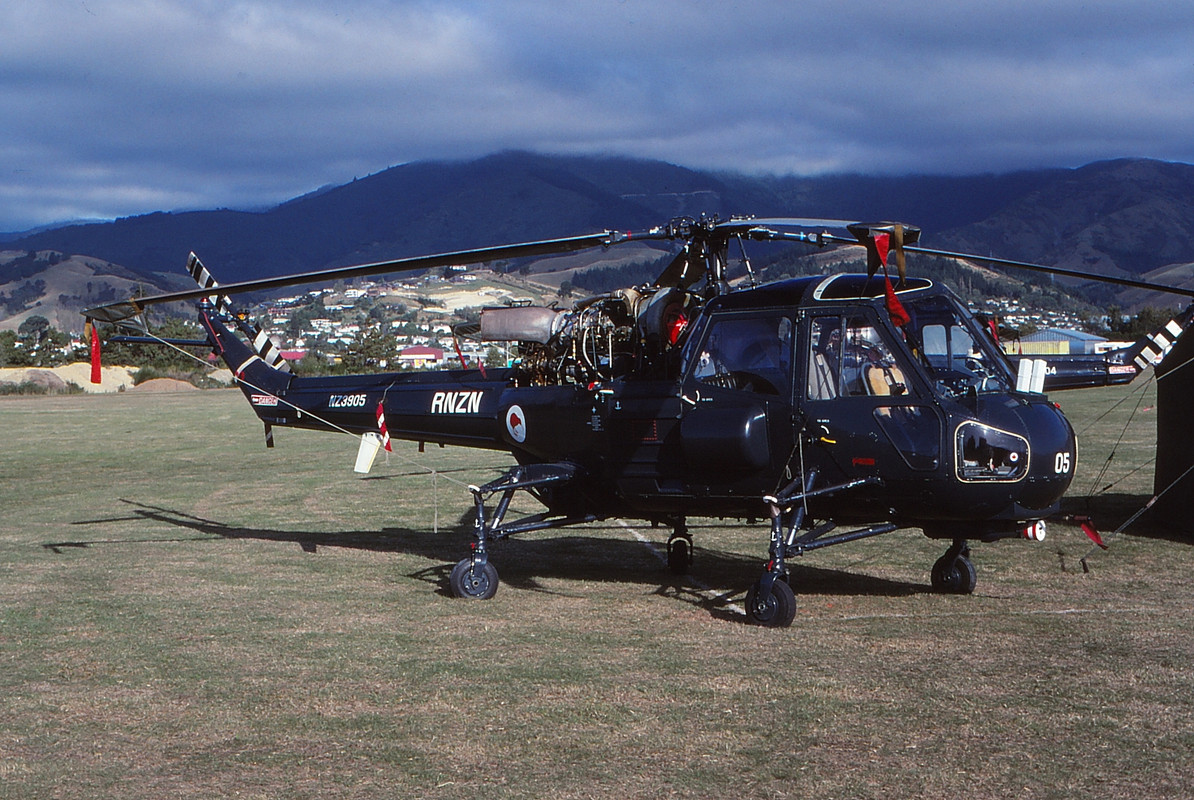
Semi-Controlled ArrivalSome years ago, back when Jesus was Bob Hoover's co-pilot, the tuna industry was a very different beast to what it is today. A number of old timers told us 'whipper snappers' tales of the
really epic runs ashore into ports that we just didn't visit anymore... Palau, Wake, Truk etc. Back at a time when men were men flying Bell 47s and there wasn't such a thing as GPS. There were stories of the Asian fishermen jumping out of the helicopter when they thought the pilot was crazy, about 'tuna bombs' Sodium or Potassium (I forget which) chunks being carried in the helicopter and then getting wet leading to the rapid disassembly of the aircraft and other supposedly true tales. The stories that popped up the most though were the ones where the weather or sea state... or both, conspired against the protagonist and he somehow got home.
The weather in the Western Pacific is unpredictably stable. Almost on queue, afternoon storms spring up and you find yourself flying around some really terrific thunder heads. However the sea state is less easy to predict. You can have two identical days where there is no wind at all and yet the sea state can be completely different. The boats that we operated off in the Western Pacific were typically 1200t, a hair over 60m long with a beam of around 12m. Not huge, but by no means small either. The ships are built for one thing and one thing only, catching tuna. The designers don't really give a s**t about little things like how it rides in the water or how much it lists when it's taking the catch onboard. The CG of a tuna purse seiner is very high because of the lookout, sometimes called the 'copa' and all of the fishing gear hanging from the back. In a storm, things get interesting. I remember on my first trip on a small Korean boat (don't get me started on the Koreans) we skirted the edge of a big cyclone. I don't get seasick at all but holy hell, the boat felt like it was coming apart. I'm sure that you've all seen footage of the destroyers in the North Atlantic during the war? That's what it was like...
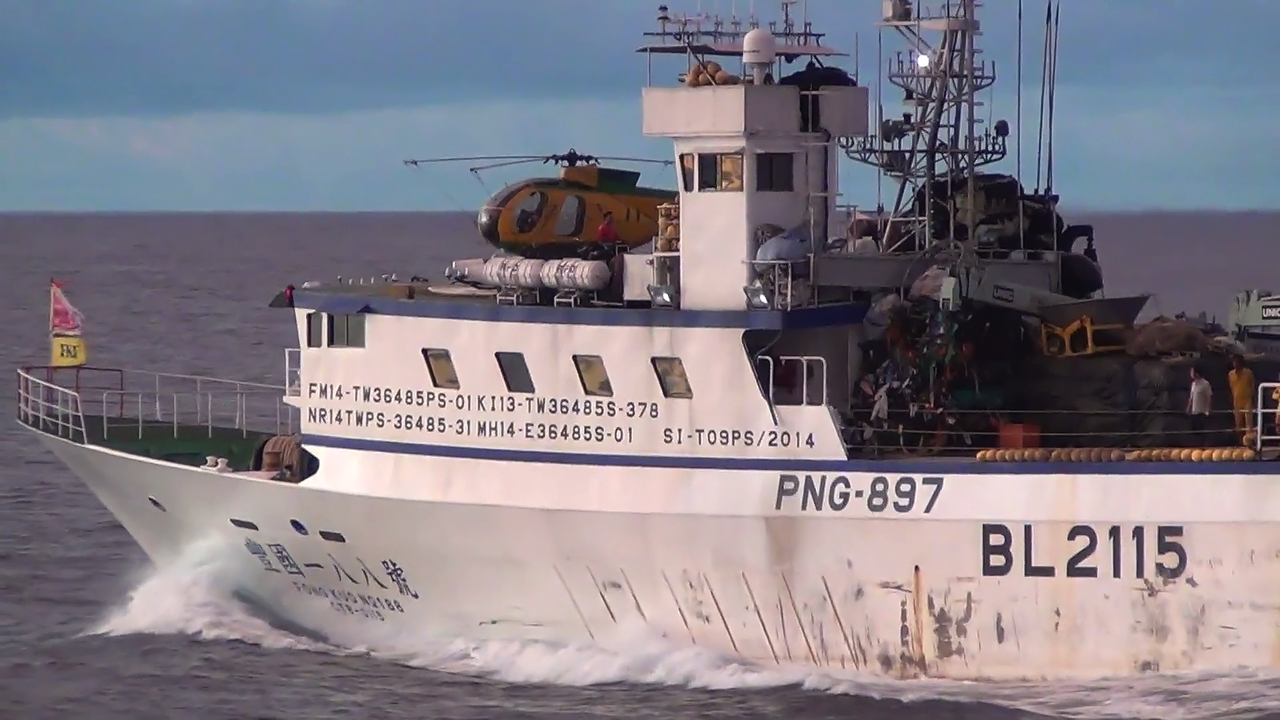
Fast forward to late 2014. I was nearing the end of my first tuna contract. I had lucked out, brand new boat, good engineer and an excellent helicopter. They say that the Kawasaki built Hughes 500s are second only to the Bredanardi NH500s which is what I had. I got along really well with everyone on the boat and life was really quite peachy. This particular day, I was sent out on a general searching flight. If nothing was on the radar, it was a 50nm leg square. We never really ended up more than 50nm from the boat. Still five hours to get to us if we were in the water but anyway. The weather was pretty good but the seas had started to change for no real reason that I could work out. When I took off from the boat, there had been no swell and no wind but starting on the last leg back to the boat... you know, the only solid surface in a 200nm square, I noticed that a swell had started. No problem really, that information just got stored in the back of my mind along with 'what the hell was the name of that guy from that movie last night?'
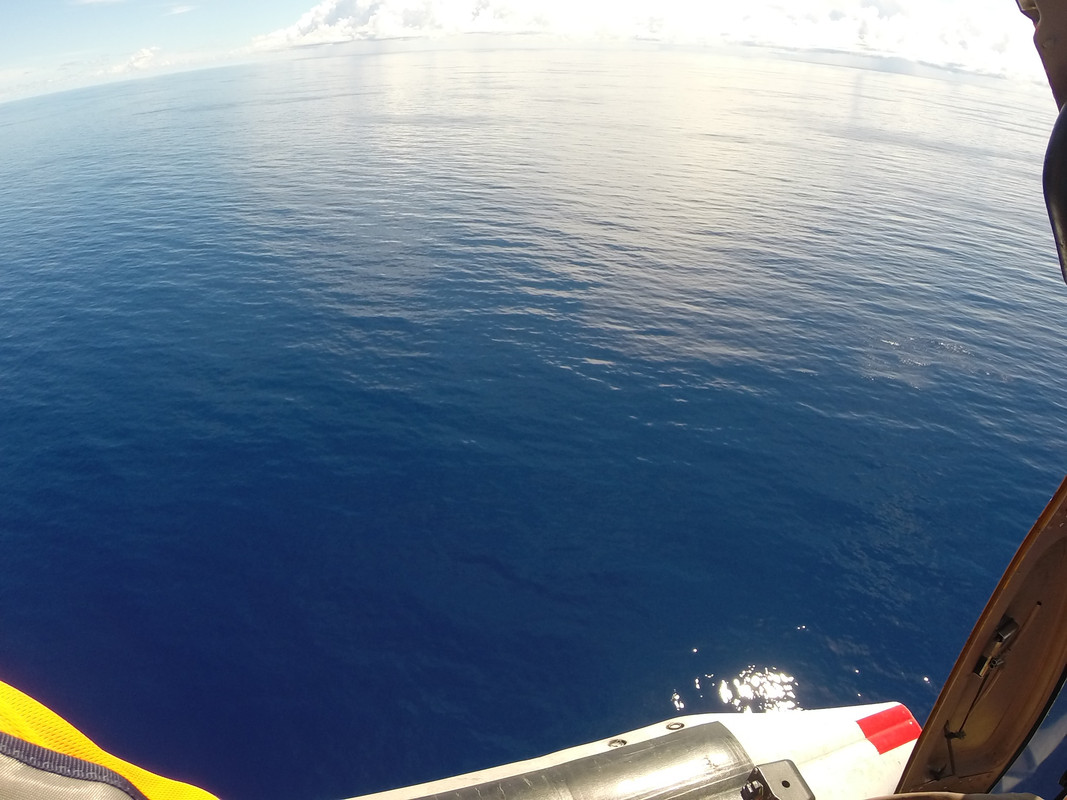
A frantic tapping on my shoulder from the chap next to me alerted me to the fact that he had found a raft. Raft, in the tuna fishing world, refers to an FAD (Fish Attracting Device) anything in the water that allows micro organisms to grow, which attracts small fish, which attracts bigger fish etc. We'd found one that had been out there for some time judging by the look of it. The spotter jumped out onto the float and attached our GPS buoy so that the boat could home in on it. While all of this was going on, I was still trying to fly the aircraft as close as I could to make his life easier. It was then that I noticed the swell properly. I was actually having to flying the aircraft over the waves to keep the same height for old mate to attach the buoy. Not really an issue but I knew that we were going to have to wash the machine when I got back.
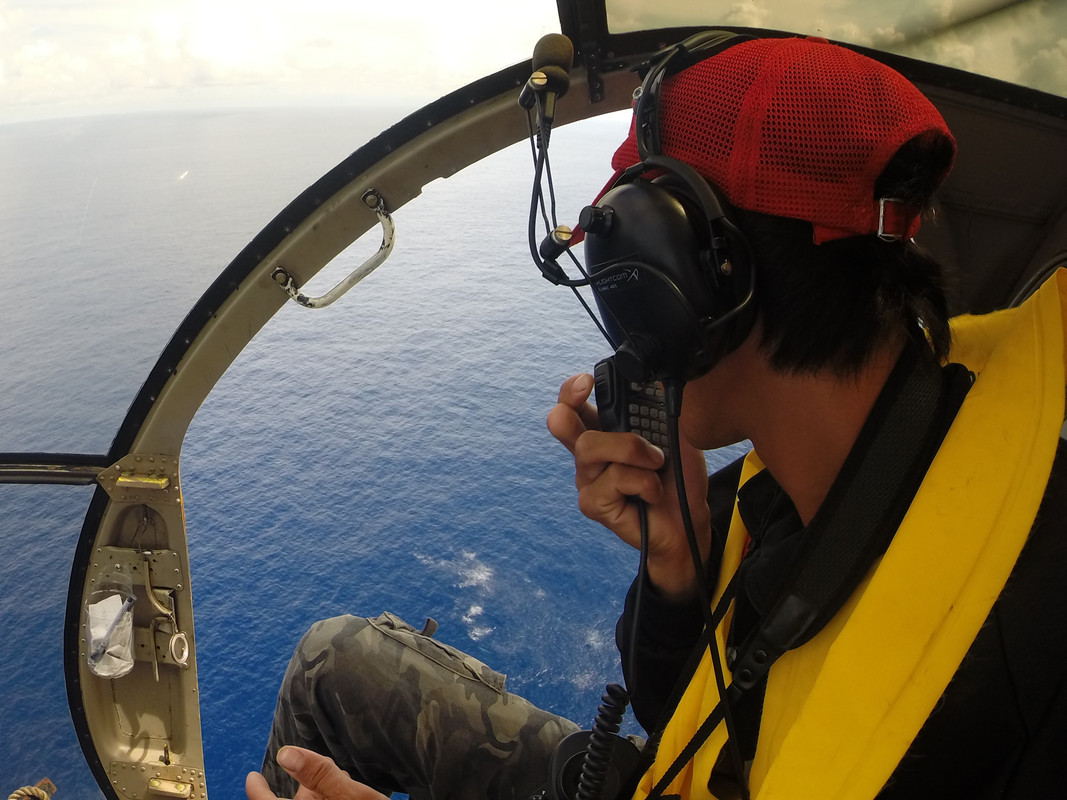
Once the buoy was attached and the boat had confirmed that they could see it on their map, we started back. We'd been gone for nearly two hours and that is getting to the limit of the old 500. The boat was heading in our direction at full speed which of course shortened the flight time back much to my relief. I dropped the aircraft down to a low level as we got close to the boat and I noticed that the sea was certainly rolling. Flying down the port side of the ship, I ripped it around the stern and lined up on the pad. The key to landing on a moving ship is to keep it moving, treating the boat as you would any other pad. There are some strange air currents flowing over the deck when the ship is underway and you don't want to be stopping where you're getting all of these air masses meeting. As I was coming up to the starboard side of the ship, movement out to the right caught my eye. The bow thruster was out of the water with the swell.... I continued toward the deck ... THE BOW THRUSTER IS OUT OF THE WATER!!!! Too late, I was already over the deck as it came up to meet me FAST. As the gap between the skids and the steel decreased, the air currents changed and I started to need more left pedal which upset the whole balance. BAM!!! It nearly bounced back into the air but I had already lowered the collective.. 'stay down you bi**h!'
The engineer raced over and strapped the aircraft down and I realised that I was holding my breath and I have no idea how long I'd been holding it for. Nobody but me thought anything of my arrival, I guess everybody had seen worse. By some strange miracle, the aircraft was in the middle of the pad and straight on the marks.. more ar*e than class.
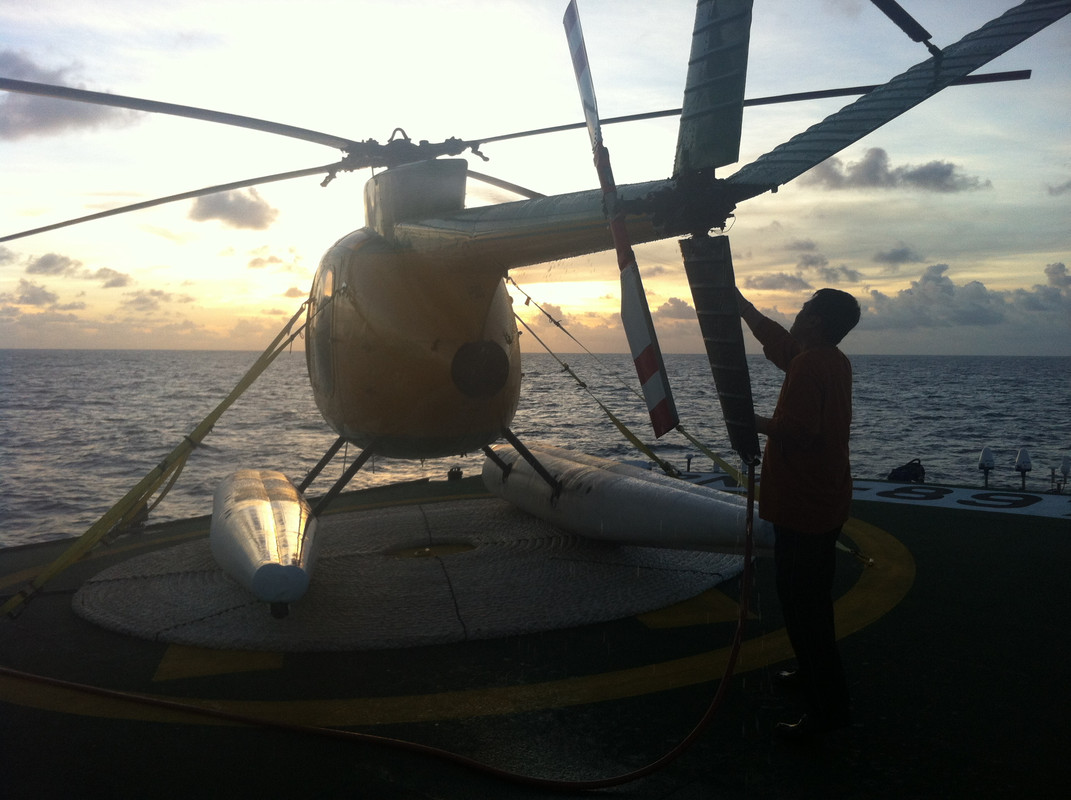
This certainly wasn't the only time that this happened in the four contracts that I flew on the boats but this was certainly the most memorable. Funnily enough, as I'm sure other pilots will attest to, sometimes in a very dynamic environment like that, you have days where it just doesn't work that well and then other days, you are 'Winkle' Brown and you can do no wrong. I guess that's what makes this stuff interesting.

 by Splitpin » Thu Apr 08, 2021 6:46 pm