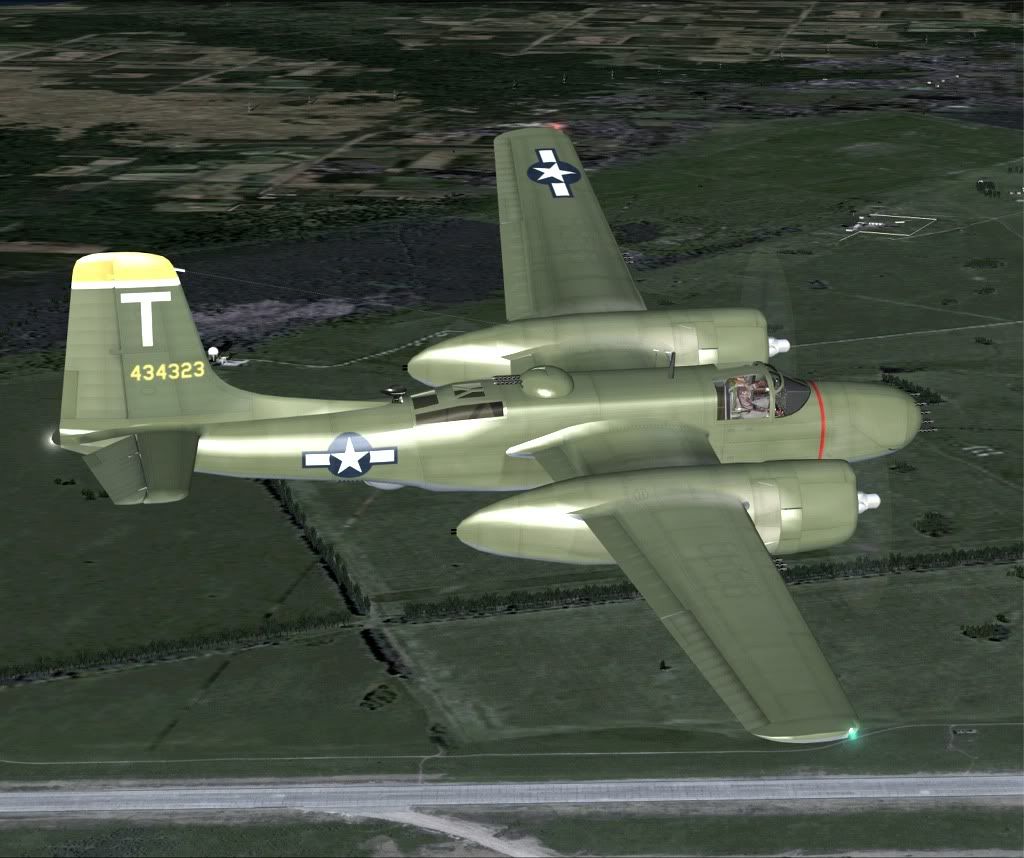
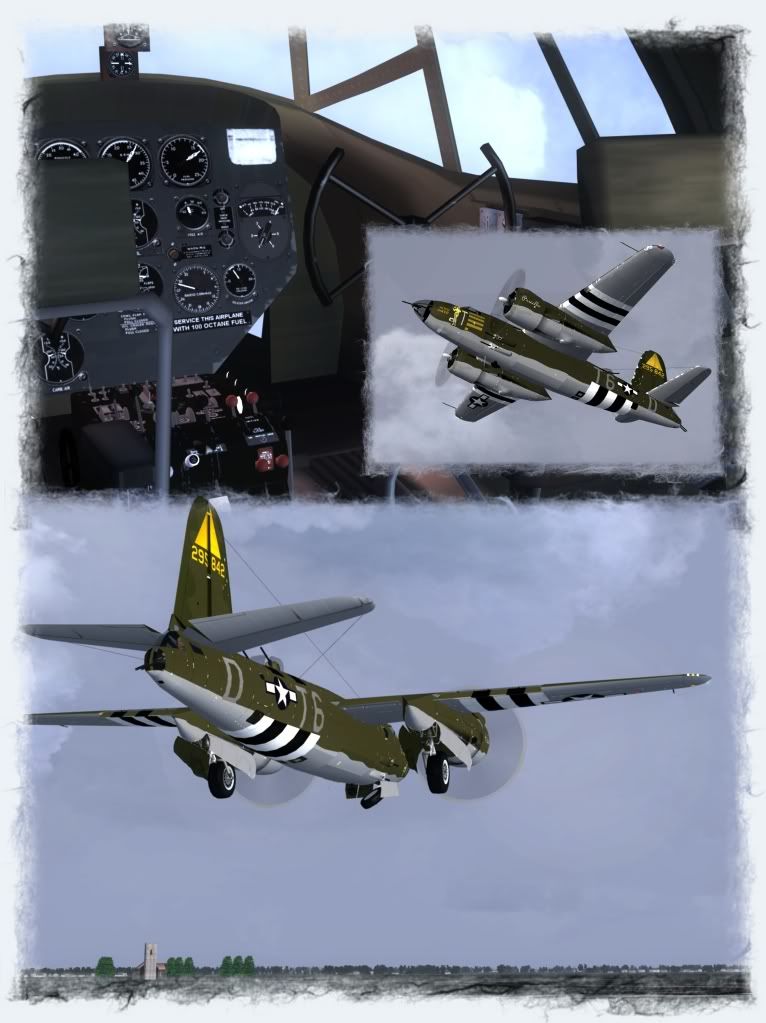
This is quite true. Follow this link
http://www.militaryfactory.com/aircraft/de...aircraft_id=299 and you will find a wealth of info on MOST aircraft ever produced and incredible site. A short blurb...
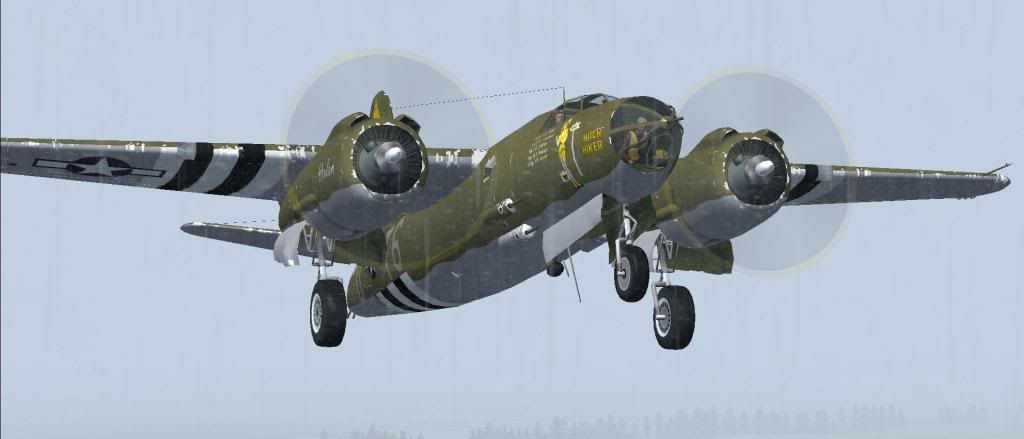
In the end, the B-26 proved to be a fitting addition to the Allied air arsenal, posting an impeccable service record. B-26's went on to have the lowest combat loss rate of any American aircraft in the conflict, owing something to its stellar design but more to the crews who flew her through her 110,000 sorties.
Conclusion
The B-26 was produced to the tune of some 4,708 to 5,288 total examples when production ceased in 1945. Despite its rough origins, the Marauder was otherwise an excellent medium bomber on par with the North American B-25 Mitchells which starred in the Pacific. The B-26 was undoubtedly fast, adequately armed and could carried an excellent bombload for an aircraft of this type. Marauders and their fighting men served well in their limited role in the Pacific but more than made up for their presence in the volatile fronts of Europe and North Africa, truly becoming one of America's finest warbirds of the conflict.
Factoids
• Design of the aircraft is credited to Peyton M. Macgruder
• Designed from the outset for speed, the B-26 suffered from a high take-off and landing speed resulting in multiple fatalities.
• B-26 flight groups were respected by Axis pilots as the type was known to be a good formation flyer.
• Marauders were the first medium-class bombers utilized in the Pacific Theater of War.
• Other non-endearing nicknames for the aircraft included "Flying Coffin", "Martin Murderer", "Flying Prostitute", "B-Dash Crash" and "Baltimore

".
http://www.boeing.com/history/mdc/invader.htmThe Douglas A-26/B-26 bomber was the only American bomber to fly missions in three wars. After World War II, it served as a first-line bomber during the Korean War and during the Vietnam War. Douglas started the A-26 in 1941 to follow the A-20/DB-7 Havoc bomber.
Douglas built 2,503 A-26/B-26 Invaders. During production a number of modifications were progressively introduced so that by 1948, the A-26 was one of the few wartime aircraft types still in service with the post-war U.S. Air Force. When the famous Martin B-26 Marauder retired and the Air Force deleted the designation "A" (for attack category), the Douglas Invader took on the B-26 designation.
Invader versions included the A-26D and A-26E light bombers, GA-26C ground training aircraft, and the KA-26A tanker. Some A/B-26s were equipped for photo reconnaissance, and during the 1960s, some surplus B-26s were used in the target-towing role. The last U.S. military Invader was retired in 1972 and donated to the Smithsonian's National Air and Space Museum.
Specifications First flight: July 10, 1942
Wingspan: 70 feet
Length: 50 feet
Height: 18 feet 6 inches
Ceiling: 22,100 feet
Range: 1,400 miles
Weight: 35,000 pounds
Power plant: Two 2,000-horsepower P&W R-2800-27 engines
Speed: 355 mph
Range: 1,800 miles
Accommodation: Three crew
Armament:
http://www.militaryfactory.com/imageviewer...rentDescriptor= The B-26K Counter Invader was based on a highly modified airframe of the World War 2-era Douglas A-26 Invader aircraft. What set the "Counter Invader" apart from its predecessor was that the new design was fielded without any of the turret systems found in the original, having them removed in favor of a heavier forward-facing armament as well as a greater internal/external ordnance load. Different engine cowls with cropped propeller assemblies were implemented as was a new cockpit layout.
Externally, the Counter Invader retained much of the same external appearance of her World War 2 sister. She sported high-mounted monoplane wing assemblies with noticeable dihedral. The engines were fitted to the leading wing edge and sported three-bladed propeller systems. Her undercarriage was made up of a tricycle arrangement featuring two single-wheeled main landing gear legs and a single wheeled nose landing gear. The cockpit remained just aft of the elongated nose assembly. The nose assembly housed the armament. The fuselage was slab-sided and tapered off into a streamlined empennage. The tail section was made up of a single squared-off vertical tail fin and two horizontal planes with dihedral.
The B-26K Counter Invader was fitted with an impressive forward-fixed nose armament assembly mounting 8 x 12.7mm (.50 caliber) machine guns. Provisions for underwing stores were also featured. These hardpoints could carry a mixed ordnance load of up to 8,000lbs. Internal bomb load capacity was an additional 4,000lbs of stores. Modifications were completed by On Mark Engineering and included wing-tip mounted fuel tanks, reversible propellers, reinforced wing structures, refined airframe improvements, new tail sections and improved powerplants. These Invaders were redesignated as A-26A "Nimrod".
While the original Douglas A-26 Invader saw combat actions throughout the Second World War and into the Korean War (1950-1953), the revised B-26K (A-26A) Counter Invader would see the lineage return in action once in 1966 over Southeast Asia. The A-26A would serve in Southeast Asia up until 1969 when they would be removed from frontline service in all capacities due to the rigors of war on the decades-old airframes. The designation of "Counter Invader" was related directly to the "counter insurgency" role that the system would play in the Vietnam War.
Text ©2003-2010
www.MilitaryFactory.com •
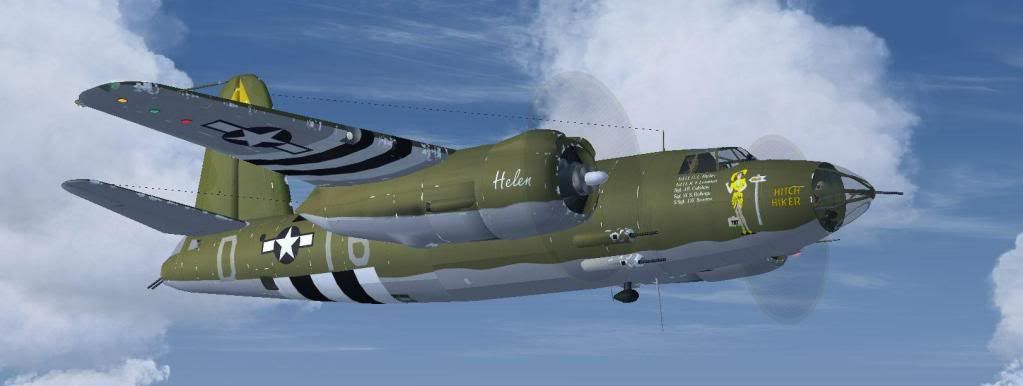
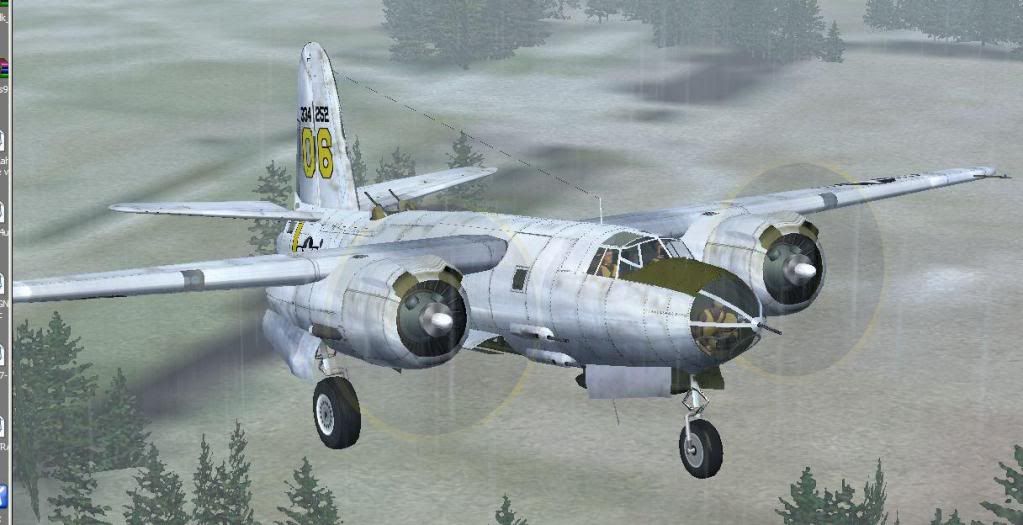

 by Ian Warren » Mon Sep 13, 2010 1:50 am



 .... B26 city here
 Just one off those pretty ones people forget .